

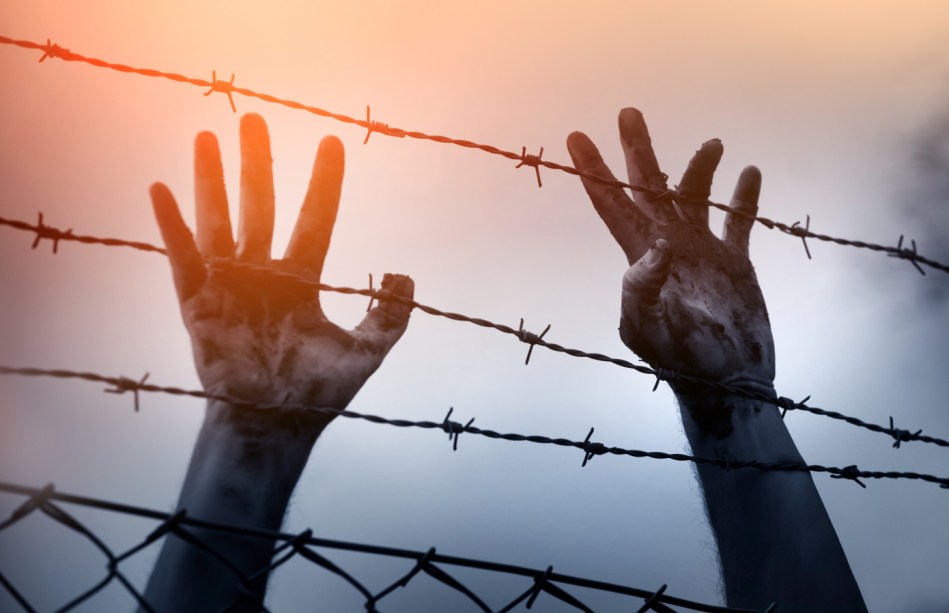
Those who fail to learn from history, are doomed to repeat it.
Our intrinsic hunger as a species for war and fighting has caused many instances of mass and undeserved human migration. We saw it after WWII, we saw it in Vietnam, and now we are seeing it in Syria. As Mark Twain once said, “History rhymes”. Why?
A Numbers Game
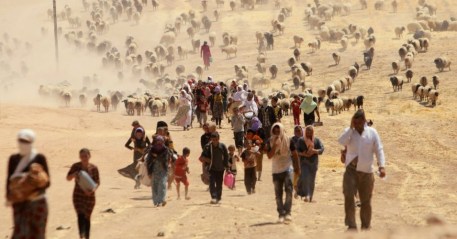
After the Second World War, the largest mass conflict in human history, you could be forgiven for thinking that the collective human guilt would solve refugee crises, or at least create a consensus, so such disasters would never happen again. However, the numbers tell a different story. Currently, in 2018, there are 4.4 million refugees in Africa, 4.3 million refugees in Europe, 2.7 million refugees in the Middle East, and around 747,000 in the Americas, and these are the regions with significant populations. In total, the UN claims there are 21 million refugees currently in the world. 21 million people with lives, stories to tell and potential to advance the world, living in perpetual limbo – homeless, sometimes stateless.
Where did the Concept of “A Refugee” Begin?
The idea of a “Refugee” has existed almost as long as civilisation itself. As soon as humans advanced beyond being “hunter – gatherers”, started to settle and discovered agriculture, naturally the settlement with the best crops were a prime target for those other settlements who’s crops were failing. Those with good crops who could not defend themselves in battle lost their land, and became homeless. This is where the “Refugee” began.
Even in ancient Greece and Egypt, the idea that a foreign person would seek a safe sanctuary from war without “punishment from the divine” was commonplace. It was a natural occurrence because of the flight of civilians in the places where wars were fought.
Defining a Refugee
It took almost 2000 years for a general definition was made over the question of who is a refugee. A legal definition of who is a refugee was adopted by the United Nations in 1951, and in short it states that any person who has been persecuted because of political beliefs, race, colour or gender, has left his or her country or homeland and does not want to return home counts as a refugee. For the first time, there was push to move towards solving the problem.
A Never-ending Cycle
If we look at the way we acted towards refugees in the past, and the way we treat them now, the parallels are scarily similar. For example, during the Second World War, US President Franklin Roosevelt referred to Jewish refugees as “saboteurs”. Today, we are calling Syrian refugees “terrorists”. Many countries are turning away refugees much the same way they did in the past, saying they want to secure their own borders and demography. In the past, refugees were taken as slaves, today, they are not put to work but they certainly are not getting an upgrade in their lives.
Why does this keep happening?
Fear of “the other” has been the driving force, and it is very hard for us as a species to acknowledge it when it is staring right at us.
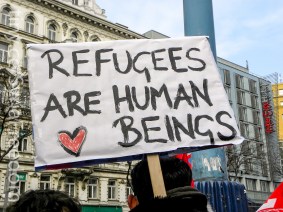
This is the denominator beneath all of the different slogans used to cover it, such as “We need to keep our borders safe”, “Our people first”, or “How do we know if the refugees are hostile? It’s easier to keep them out.” . All countries are guilty of this.
Human beings are naturally pack animals. Since our hunter-gatherer roots, we lived in tight packs and it was almost impossible for an outsider to join. This carries on into today’s societies, which, at their root, are still based on that pack animal mentality. If we are to advance as a species, we need to go beyond that mentality and think in a collectivistic mindset. That will be the first step to solving this never ending problem.
 Historyan
0 comments on “Refugees – A Song on Repeat”